

Quantum dots (QDs) are tiny semiconductor particles with unique properties that differ from their bulk counterparts. Due to their nanometer-scale size, quantum dots are governed by quantum mechanics, and discrete energy levels are observed within the material. Tuning the quantum dot parameters alters attributes, which can be desirable for optoelectronics, solar cells, and quantum computing.
In semiconductors, an electron is excited to the conduction band and creates an electron-hole pair known as an exciton. This exciton has a probabilistic radius, known as the Bohr radius, which determines the band gap of a semiconductor. When the size of the semiconductor is reduced or confined to a length smaller than the Bohr radius, the energy state of the material increases. The level of quantum confinement due to size and shape can be used to tune the band gap and change the properties. [1]

Representation of quantum confinement. When the size of the semiconductor material is smaller than the intrinsic Bohr radius of the material, the exciton is considered confined.
Quantum dots were first commercialized by utilizing their tunable nature for TV screens. By designing quantum dots that emit known wavelengths during electron-hole recombination, high-performance color pixels were created [2].
By contrast, photodetectors were created with CQDs to extract and measure the excited electrons. With the ability to modify the band gap, QD photodiodes were developed to sense lower-energy photons (wavelengths) in the SWIR region and beyond.
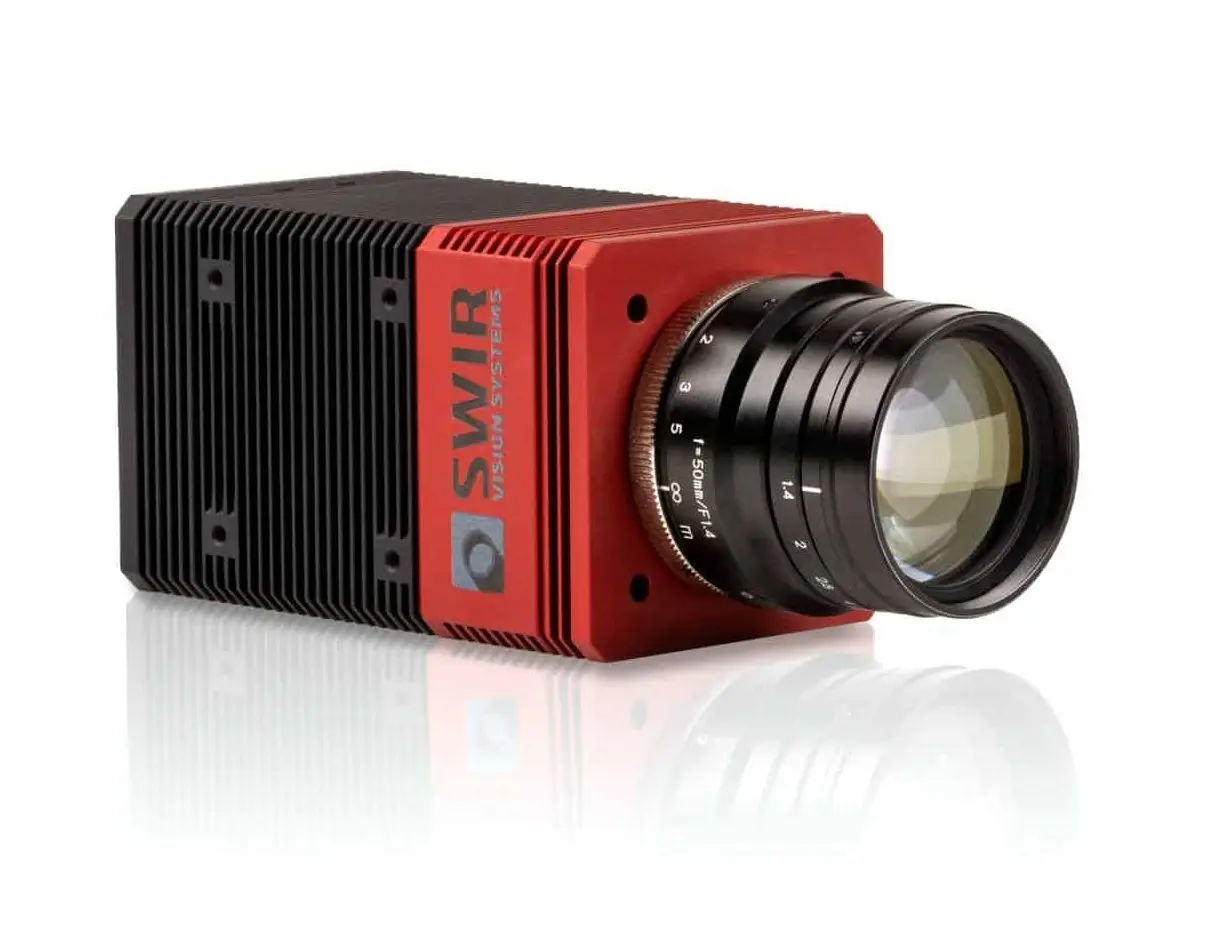
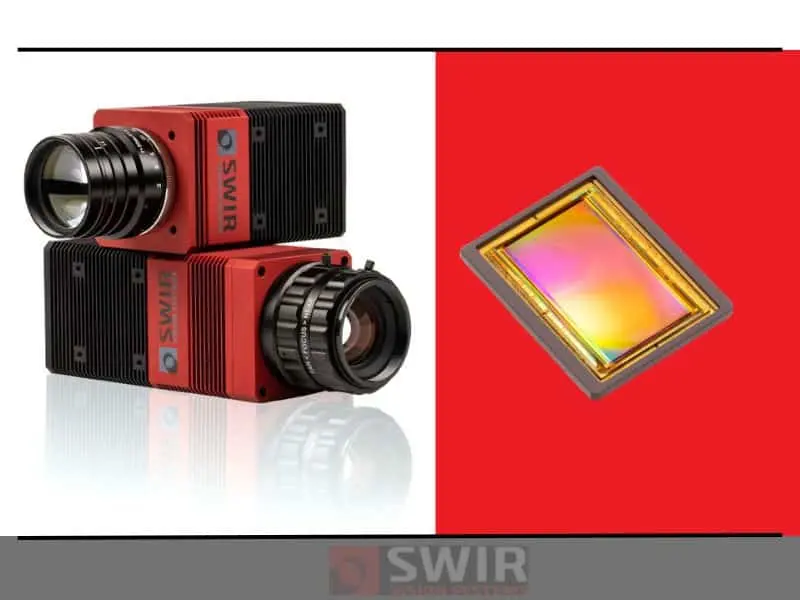
SWIR Vision Systems pioneered the industry’s first SWIR quantum dot sensor in 2018. Our process uses colloidal quantum dots (CQDs) in a spin-coat deposition process to make low-cost, high-resolution sensors. Our team has developed proprietary treatments and thin film layers for the photodiodes to withstand harsh environments, drastically extend longevity, and optimize dark currents. The sensors are fabricated, packaged for camera assembly, and shipped all from the same facility in Durham, North Carolina.
Related Links
References