Patented Core Technology
CQD SWIR Sensor Technology
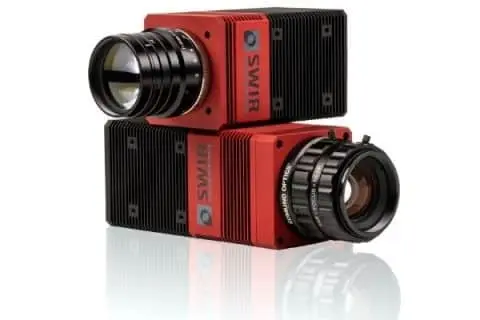
SWIR Vision Systems® has introduced a new class of cameras featuring a 400nm to 1,700nm broadband image sensor technology based on colloidal quantum dot (CQD®) thin film photodiodes fabricated monolithically on silicon readout wafers.
These sensors have the potential to achieve for SWIR imaging, what CMOS image sensors and micro-bolometer arrays have achieved for visible and longwave infrared imaging respectively.
Namely, to leverage the scale and cost structure of the silicon integrated circuit industry, moving SWIR imaging from a specialized niche into broad commercial markets.
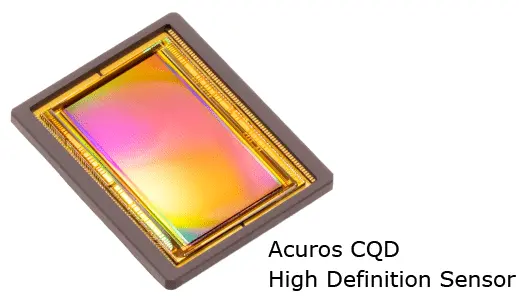
SWIR SENSOR
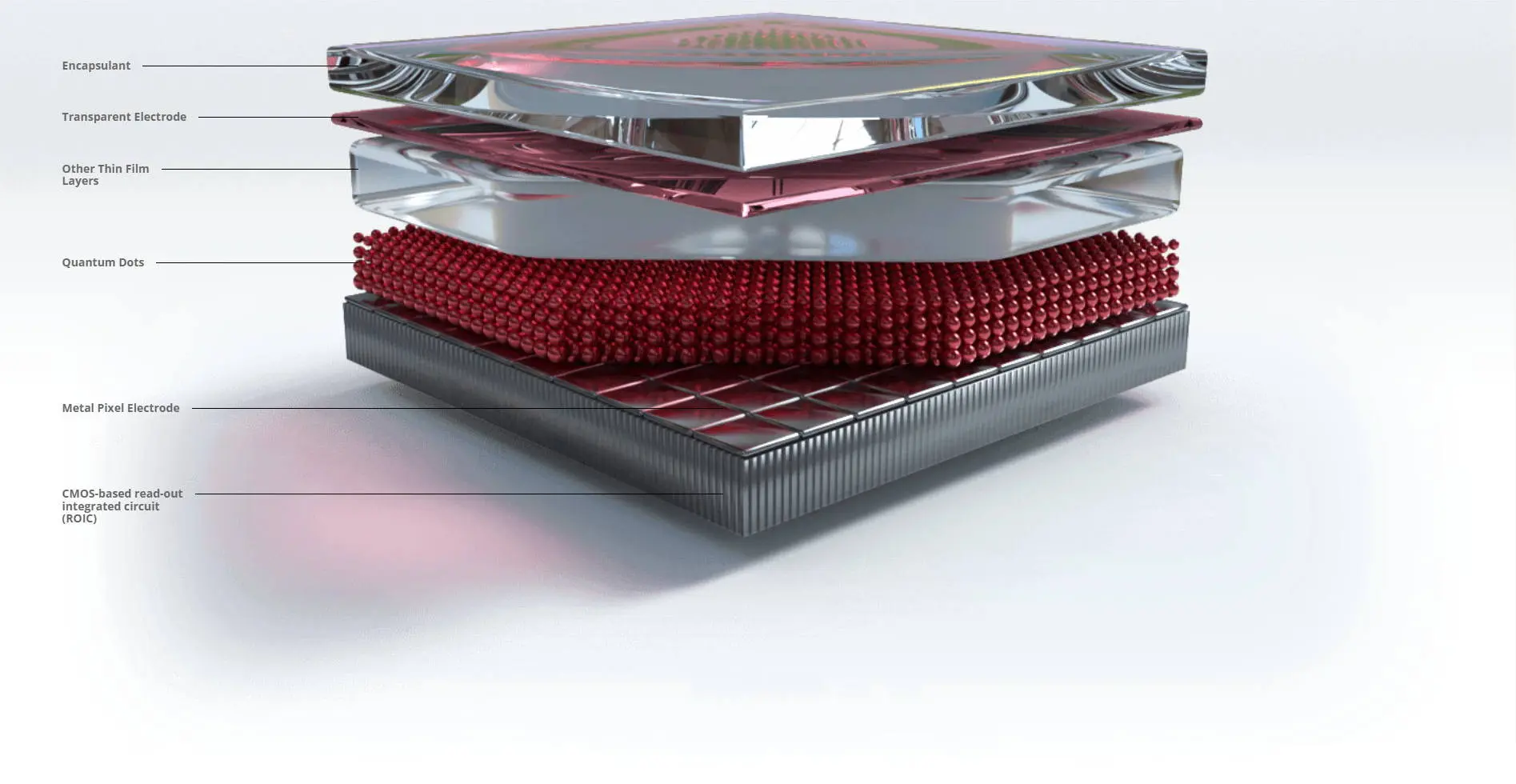
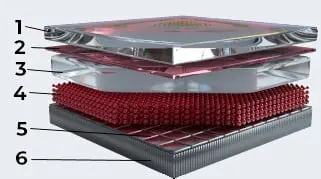
- 1. Encapsulant
- 2. Transparent Electrode
- 3. Other Thin Film Layers
- 4. Quantum Dots
- 5. Metal Pixel Electrode
- 6. CMOS-based read-out integrated circuit (ROIC)
THE CQD PROCESS:
The process requires no hybridization, no epitaxial growth or exotic substrate materials, scaling easily to high volume production. The approach employs low-cost, solution-processed, colloidal quantum dots to form small pitch p-n photodiode arrays sensitive in both the SWIR and visible spectral bands.
COMPARE SENSOR TECHONOLOGIES
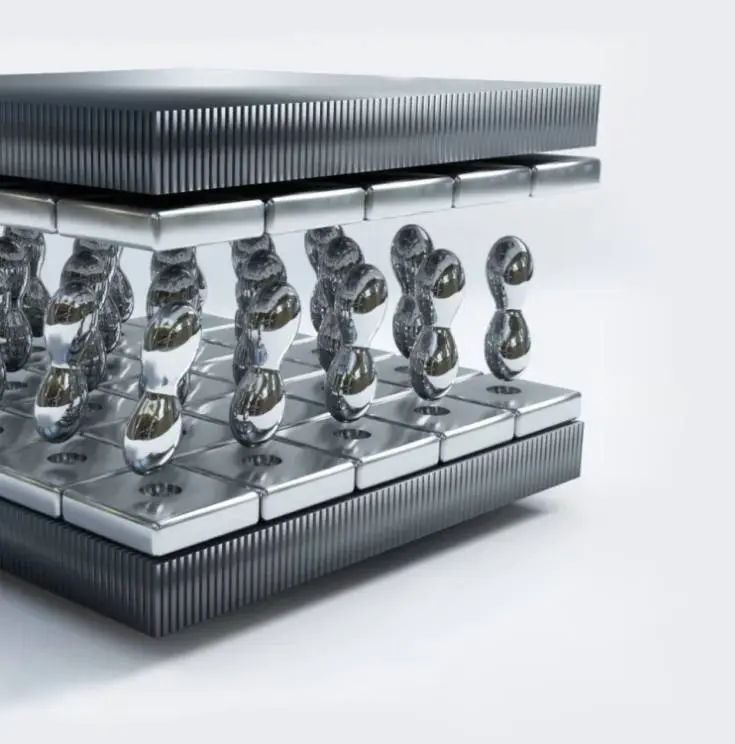
InGaAs SWIR
- Lower resolution
- Not volume scalable
- Not cost scalable
- Difficult to export
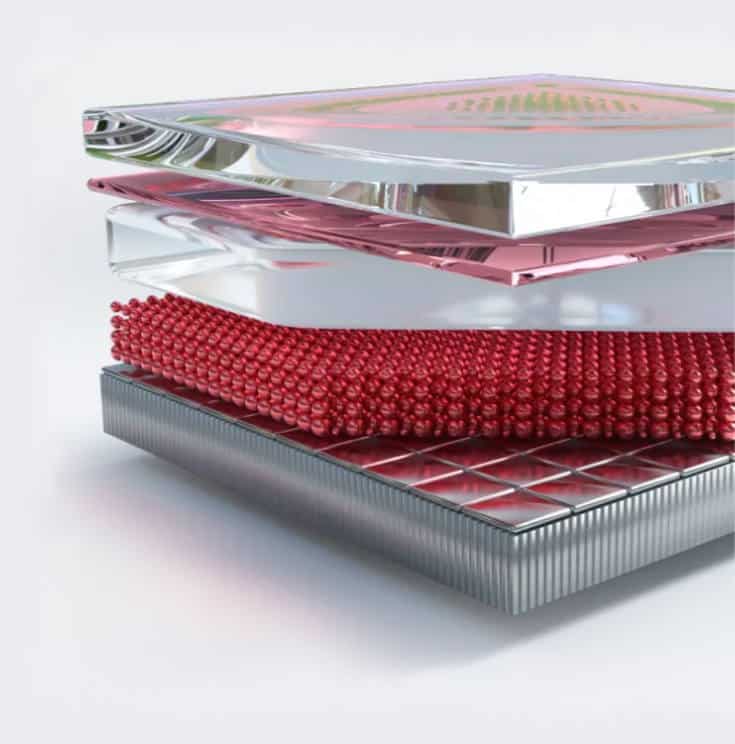
Acuros CQD SWIR
- Higher resolution
- Scalable to high volume
- Scalable to very low cost
- EAR99 for global export
SWIR CQD Sensor Vs Indium Gallium Arsenide (InGaAs) Sensor
The current SWIR imaging market is dominated by indium gallium arsenide (InGaAs) sensors, a compound semiconductor grown epitaxially on lattice-matched indium phosphide (InP) substrates.
The fabrication method imposes limitations on pixel size, pixel spacing, and sensor resolution; commercially practical InGaAs SWIR cameras are limited to VGA resolution, and even these are considered too costly for most machine vision applications.